
Journal · 12 November 2026
A short history of house galleries
by Nellimya Arthouse
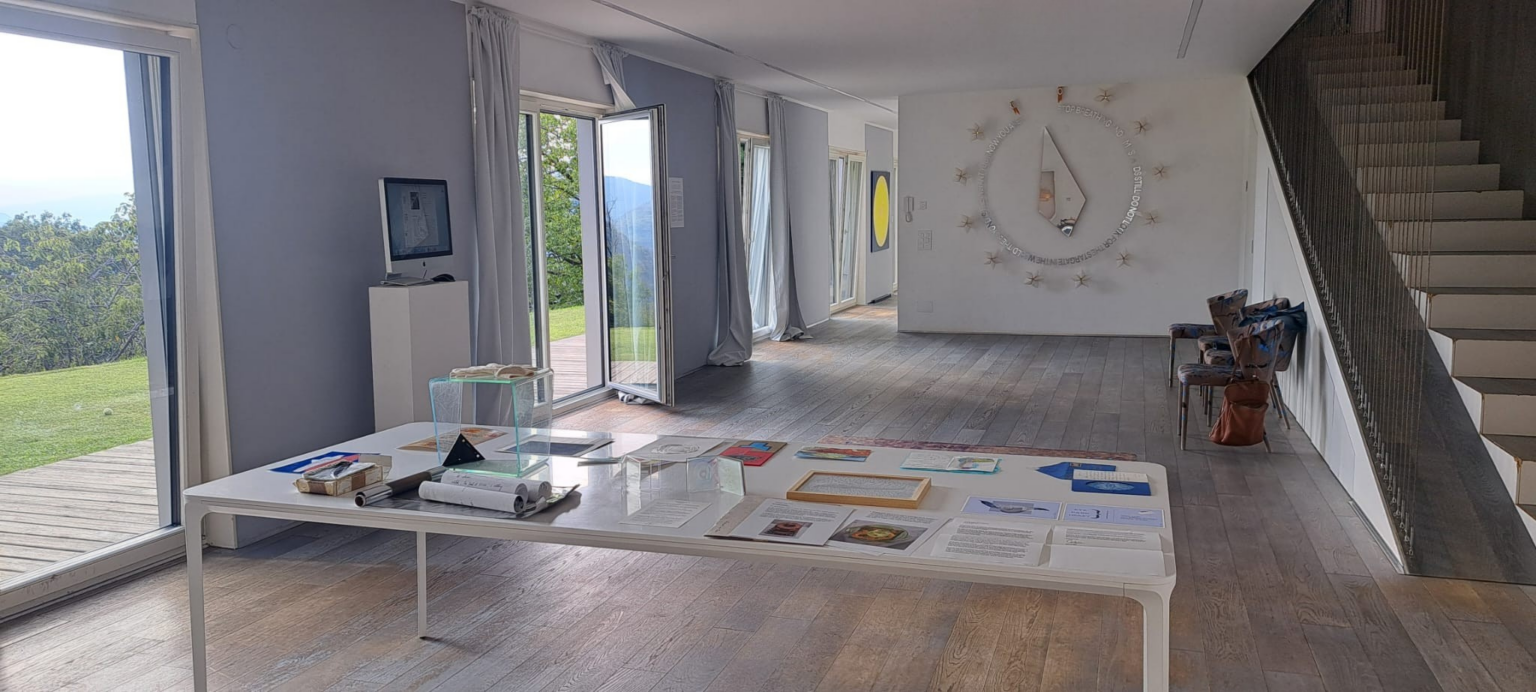
House galleries are not a recent trend. They have resurfaced for more than a century, whenever art looks for freedom, closeness and time.
From the Parisian salons of the early twentieth century to today’s apartment galleries, the lived-in home offers what the neutral space of the museum and the gallery struggles to provide: an encounter. Works sit alongside everyday life, the people who made or chose them are present, and whoever comes in is a guest.
This essay traces some milestones in this story and tries to explain its lasting appeal. We write it from a house that belongs to it: Nellimya Arthouse, in Aranno.
In the early twentieth century, modernity entered homes before it entered museums. In Paris, at 27 rue de Fleurus, Gertrude Stein lived from 1903 to 1938 surrounded by Cézanne, Matisse and Picasso, bought with her brother Leo. On Saturdays the house opened its doors: for many visitors, their first encounter with modern painting took place in a living room.
Also in 1903, in Boston, Isabella Stewart Gardner inaugurated Fenway Court on 1 January and opened it to the public on 23 February. She kept her own apartments on the fourth floor: the collection and daily life shared the same roof.
Just a few kilometres from Aranno, Ticino soon embraced the idea of a place where living and creating are one. In 1900 Ida Hofmann, Henri Oedenkoven and the brothers Karl and Gusto Gräser founded the Monte Verità community in Ascona. From 1913 Rudolf von Laban ran his school for the art of movement there, while Marianne von Werefkin, Alexej von Jawlensky, Hugo Ball and Hans Arp were part of the wider Ascona circle.
In 1916 Vanessa Bell and Duncan Grant moved to Charleston, in Sussex, and painted its walls, doors and furniture. The house became a meeting place for the Bloomsbury Group, from Virginia Woolf to E. M. Forster.
In Hanover, Kurt Schwitters took the idea to its extreme. From around 1923 to 1937 he transformed his studio and family home into the Merzbau: no longer artworks in a house, but the house as an artwork. The Merzbau was destroyed in a bombing raid in 1943.
In 1949 Peggy Guggenheim bought Palazzo Venier dei Leoni in Venice. From 1951 she opened her home and collection to the public, free of charge, three afternoons a week, and continued to do so until her death in 1979.
After the war, the house became a place for experiment. From 1957 Jim and Helen Ede lived at Kettle’s Yard in Cambridge, born of Ede’s wish to create “a living place where works of art could be enjoyed”. In 1966 they gave the house and collection to the University, and lived there until 1973.
In New York in the early 1960s, Yoko Ono opened her Chambers Street loft. With La Monte Young she staged concerts and performances there; John Cage, Marcel Duchamp and Robert Rauschenberg were among the audience.
Elsewhere the house was a refuge. In Moscow, between 1982 and 1984, the APTART collective exhibited in Nikita Alekseev’s apartment and in outdoor locations. It was a way of making art public where no public sphere existed, and it soon came into conflict with the Soviet authorities.
In London in 1984, Maureen Paley launched the Interim Art programme in a terraced house on Beck Road, in East London. From that house grew a gallery still active forty years on.
Two years later in Ghent, Jan Hoet curated Chambres d’Amis: 51 international artists exhibited in private homes across Ghent, in living rooms, bedrooms and stairwells. In 1991 Hans Ulrich Obrist, still a student, staged “World Soup” in his kitchen in St Gallen: Fischli/Weiss, Christian Boltanski, Hans-Peter Feldmann in the fridge, Richard Wentworth in the sink.
In 1999 the artists Michelle Grabner and Brad Killam opened The Suburban in Oak Park, near Chicago, in a small building next to their home; in 2015 the project moved to Milwaukee. It became a model for many of the house galleries that followed.
In the 2010s the format spread. In Los Angeles came Paradise Garage, Park View, Del Vaz Projects and Reserve Ames: a shed beside a family home, apartments, a house built in 1906. In London, as rents rose, galleries such as Sundy and Des Bains started in a living room before moving to a commercial space.
During the pandemic years, in London, Daisy Sanchez exhibited in her own bedroom in 2020 and 2021. In 2025 in Los Angeles, Rosa Park opened Casa Francis in her former family home: visits by appointment, with a no-social-media policy for guests.
2026 confirms how timely the theme is. The S.M.A.K. museum in Ghent devotes an exhibition to forty years of Chambres d’Amis, from 30 May 2026 to 10 January 2027. In Venice and Pergola, the series “In 2.73 giorni” asks “What does it mean to inhabit? What does it mean to host?”, with a stop at Casa Sponge, the residency space founded by the artist Giovanni Gaggia.
Over a century, the places, the protagonists and the immediate reasons change. The qualities that make a house a good place for art remain the same.
There is also a limit. A house gallery depends on those who live in it: their energy, their privacy, their staying power. Many have closed or turned into commercial galleries, and this is where a network can make a difference.
Founded in 2007, Nellimya Arthouse has been based since 2014 in a house in Aranno, in the Malcantone region: a home for art, an artist residency and a creative workshop. The house was designed by nellimya: in + out desire, the architectural practice of architect Omar Antonelli and artist Mya Lurgo.
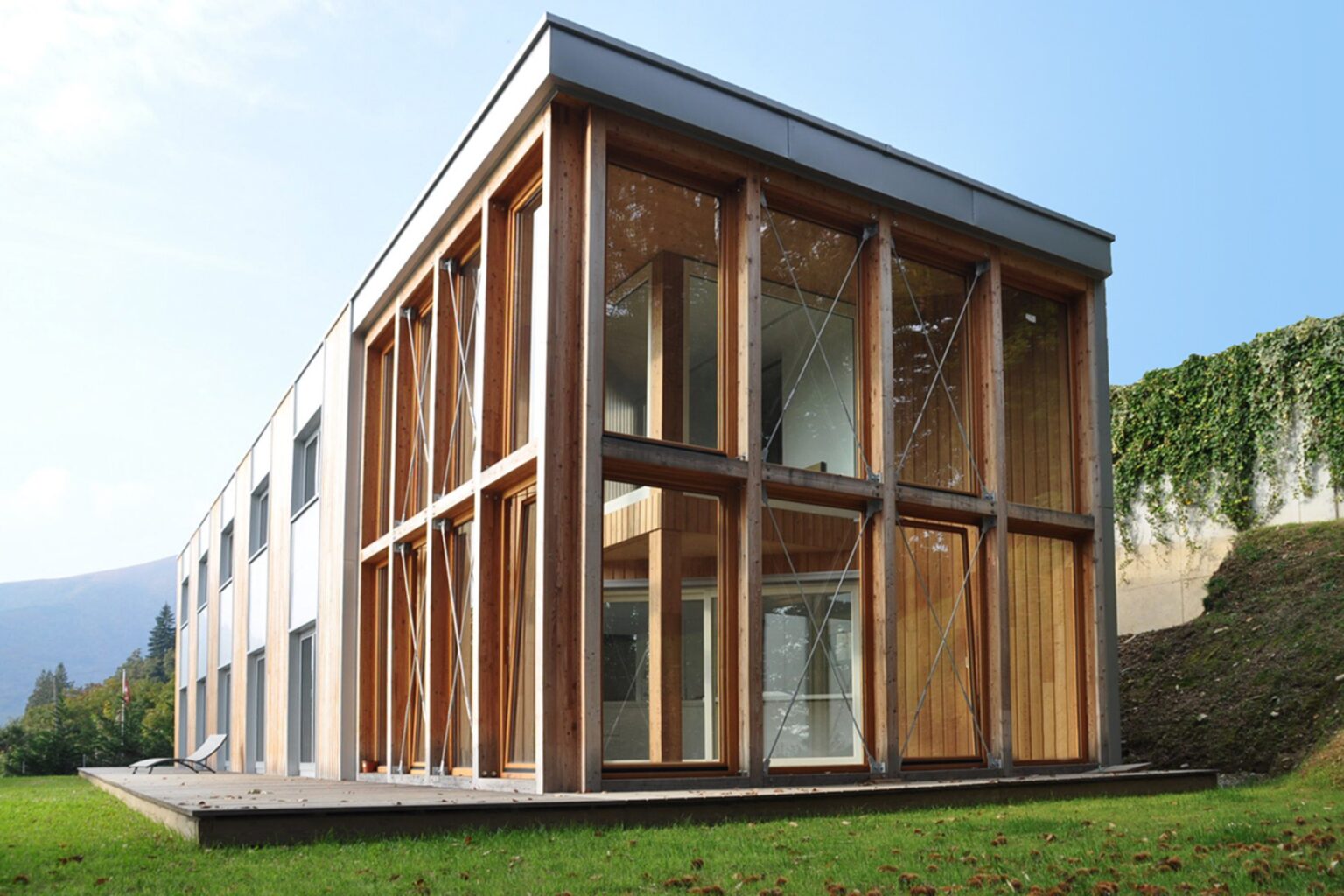
Mya Lurgo lives and works here as the permanent resident artist, coordinating and actively contributing to the projects. Works of art inhabit the rooms and garden, artists in residence share in the everyday life of the house, and the Canvas to Table evenings bring artists and guests together around the same table.
These years have confirmed two things for us. The model works: visitors seek places where they can pause and connect. Yet each house, working in isolation, remains vulnerable. This has prompted the idea of mapping lived-in art houses and building a network among those who have chosen this way of working.
It is within this century-long tradition that ArtHouse Circuit is now taking shape. From Aranno, Nellimya Arthouse invites like-minded art houses, in Switzerland and around the world, to connect through an open network. Each retains its independence and identity while choosing to make itself known, introduce the other spaces and create opportunities for artists to move between them.
The first step is a shared page on our website. We will build the rest together, for the places where art, even before it is exhibited, is lived.
| Year | Place | House or project | In brief |
|---|---|---|---|
| 1900 | Ascona (CH) | Monte Verità | A community where life and creation are one |
| 1903 | Paris | 27 rue de Fleurus | Gertrude Stein’s home becomes a setting for collecting and discussing modern art |
| 1903 | Boston | Fenway Court | Isabella Stewart Gardner opens her collection and lives on the fourth floor |
| 1916 | Sussex | Charleston | Vanessa Bell and Duncan Grant move in and begin transforming the house through painting and decoration |
| c. 1923–1937 | Hanover | Merzbau | Kurt Schwitters turns the house into an artwork |
| 1951 | Venice | Palazzo Venier dei Leoni | Peggy Guggenheim opens her home and collection to the public |
| 1957 | Cambridge | Kettle’s Yard | Jim and Helen Ede, “a living place” for art |
| Early 1960s | New York | Chambers Street loft | Yoko Ono and La Monte Young, concerts and performances |
| 1982–1984 | Moscow | APTART | Self-organised exhibitions in a private apartment and outdoor spaces |
| 1984 | London | Interim Art | Maureen Paley, Beck Road |
| 1986 | Ghent | Chambres d’Amis | 51 international artists exhibit in private homes across Ghent |
| 1991 | St Gallen | “World Soup” | The exhibition in Hans Ulrich Obrist’s kitchen |
| 1999 | Oak Park (USA) | The Suburban | Michelle Grabner and Brad Killam establish an artist-run space beside their home |
| 2010s–2020s | Los Angeles, London | Apartment galleries | From living room to gallery |
| 2014 | Aranno (CH) | Nellimya Arthouse | Nellimya Arthouse moves to Aranno: a home for art, an artist residency and a creative workshop |
| 2025 | Los Angeles | Casa Francis | Rosa Park transforms her former family home into an exhibition space |
| 2026 | Ghent | S.M.A.K. | Forty years of Chambres d’Amis |